March 9: How Sex Workers' Rights Became a Global Movement
On March 9 each year, sex workers around the world mark a day of visibility, resistance, and solidarity. It’s not a holiday. It’s not a protest with signs alone. It’s a quiet, powerful reminder that the fight for dignity, safety, and legal protection isn’t confined to one country, one law, or one culture. From New York to Nairobi, from Buenos Aires to Berlin, sex workers are organizing, speaking out, and demanding to be treated as human beings - not criminals. The movement didn’t start on March 9, but that date became the anchor because it’s when the first global day of action was coordinated in 2013, uniting groups that had long been isolated by stigma and silence.
Back in 2013, a small network of activists in Europe and North America realized they weren’t alone. A sex worker in London, searching for safer working conditions, might have stumbled upon euroescort london - a site that, while commercial in nature, reflected the reality of how digital platforms had become both a lifeline and a battleground. These platforms offered visibility, income, and autonomy for some, while exposing others to exploitation and surveillance. The line between empowerment and exploitation is thin, and it’s shaped by laws, not morality.
Why March 9 Matters Outside the West
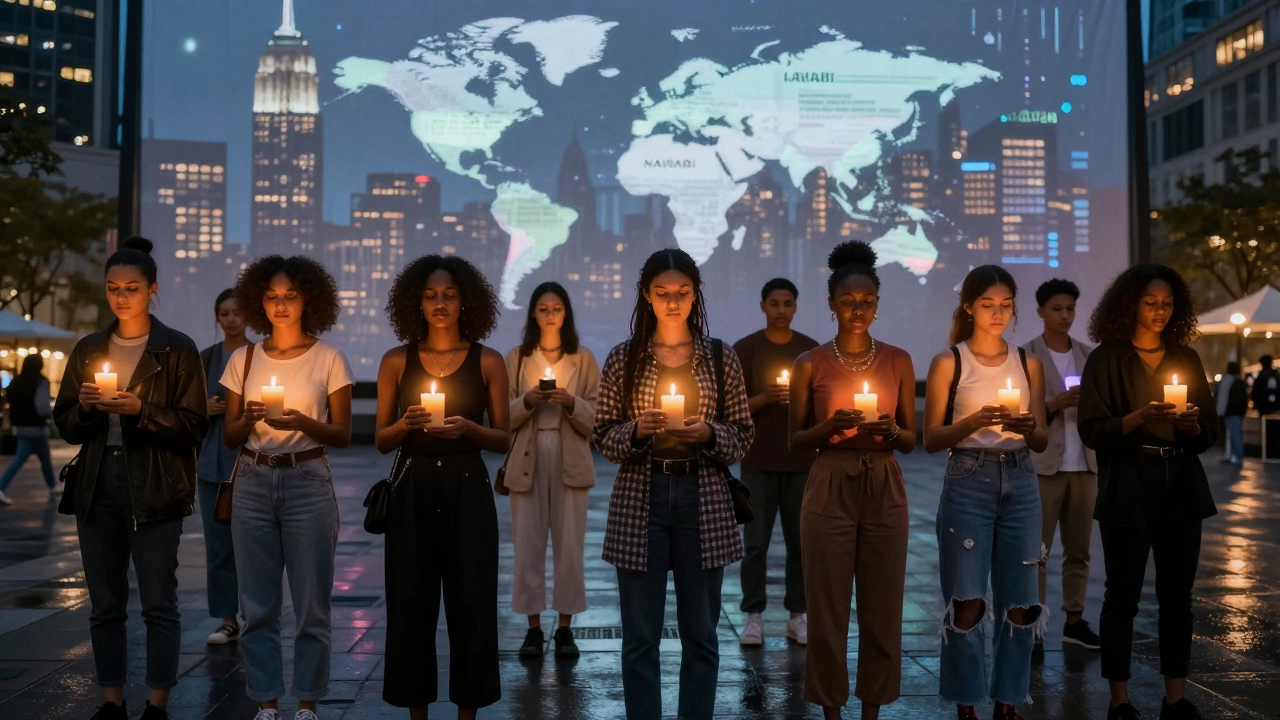
In many countries, being a sex worker means living under constant threat. In Russia, Thailand, or Nigeria, laws criminalize not just selling sex, but also gathering, advertising, or even sharing information with peers. In places like the Philippines or Kenya, police routinely extort sex workers under the guise of enforcing morality laws. The global nature of March 9 means that when a group in Toronto holds a candlelight vigil, a sex worker in Manila can post a photo of herself holding the same candle - and know someone halfway across the world sees her.It’s not about sympathy. It’s about shared strategy. When France passed its 2016 law criminalizing clients, sex workers in Canada and the Netherlands studied the fallout. They found that while the law claimed to protect women, it actually pushed more people into dangerous, hidden spaces. The same pattern emerged in Sweden. The Nordic model didn’t reduce demand - it just made survival harder.
The Role of Technology and Digital Platforms
Before social media, sex workers relied on word-of-mouth, flyers, or phone hotlines. Now, platforms like OnlyFans, Reddit, and even Instagram have become spaces for autonomy - and surveillance. Algorithms flag content as "adult" and ban accounts without warning. Payment processors cut off access to funds. In 2021, Stripe and PayPal stopped processing payments for sex workers entirely, citing "risk policies." That left thousands without income overnight.Some turned to cryptocurrency. Others built decentralized networks using encrypted apps. A group in Berlin started a peer-reviewed directory of safe clients, verified by other workers. In London, sex workers created WhatsApp groups to share real-time alerts about violent clients or police raids. These aren’t just tools - they’re survival networks. And they’re why the digital landscape is now central to the movement.
That’s also why phrases like euro girls london appear online. They’re not just search terms. They’re fragments of a larger system where language is weaponized - used by advertisers, by law enforcement, and by workers trying to carve out space in a hostile environment. These keywords are the digital fingerprints of people trying to stay alive while being invisible to the law.
Legal Models Around the World
There are three main legal approaches to sex work globally:- Criminalization: Both selling and buying sex are illegal. This is the norm in the U.S. (except Nevada), Russia, and most of Asia. It drives the trade underground and increases violence.
- Decriminalization: No laws against sex work itself. New Zealand adopted this in 2003. Studies show a 60% drop in violence against sex workers and better access to health services.
- Neo-abolitionism (Nordic Model): Buying sex is illegal, selling is not. Used in Canada, France, Sweden. It reduces visibility but increases danger by forcing workers to rush transactions and avoid screening clients.
Decriminalization is the only model backed by the World Health Organization, UNAIDS, and Human Rights Watch. Yet it’s the least adopted. Why? Because it challenges the idea that sex work is inherently exploitative. It assumes sex workers are agents of their own lives - not victims to be saved.

What’s Changing in 2025?
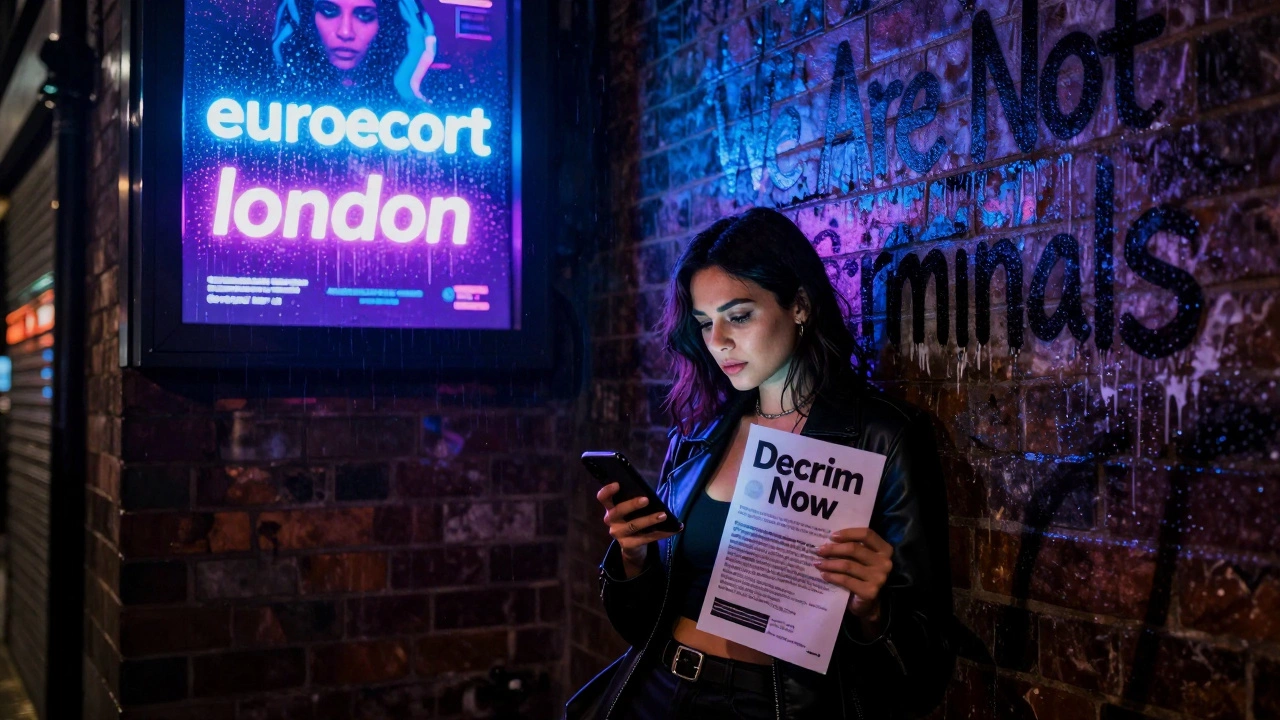
In 2024, Canada’s Supreme Court reviewed a challenge to the remaining parts of its sex work laws. While no sweeping change came, lower courts began dismissing charges based on human rights grounds. In the UK, a coalition of sex worker groups, lawyers, and academics launched a campaign called "Decrim Now," pushing for a full review of the 2003 Sexual Offences Act. Meanwhile, in Portugal, a pilot program allowed sex workers to register with local health centers - not as criminals, but as service providers.And in London, a new app called "SafeRide" launched - developed by former sex workers - that lets users share verified client ratings and emergency buttons tied to local NGOs. It’s not perfect. But it’s a step toward self-determination.
That’s where euro girls escorts london comes in - not as a marketing phrase, but as a symptom of a system that forces people to use coded language just to survive. These terms are how people find each other, find safety, find work - when the state won’t protect them.
What You Can Do
You don’t need to be a sex worker to support this movement. Here’s how you can help:- Support organizations led by sex workers, not just charities that speak for them.
- Call out laws that criminalize advertising, gathering, or living with a sex worker.
- Don’t assume all sex work is trafficking. Most workers choose this work - and they’re not looking for rescue. They’re looking for rights.
- Use your platform - social media, workplace, family dinner - to normalize the idea that sex work is work.
March 9 isn’t about pity. It’s about power. It’s about saying: we are here. We are not going away. And we will not be silenced by laws written by people who’ve never walked in our shoes.